2026 How to Choose Commercial LED Fixtures?

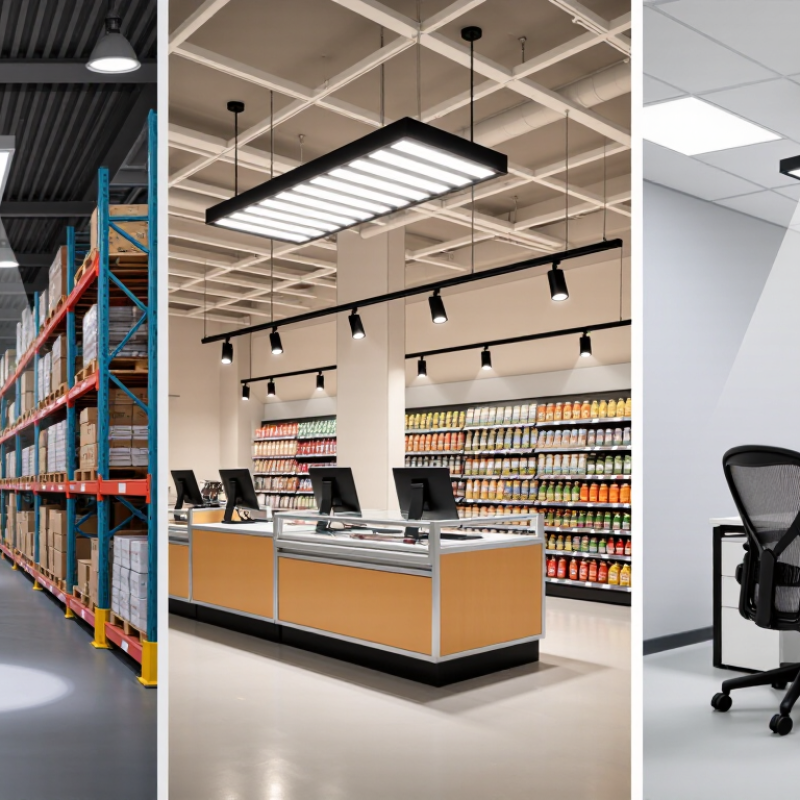
Choosing Commercial Led Fixtures in 2026 is less about picking the brightest product and more about matching light to the work. A warehouse aisle, a retail counter, and an office desk have different needs. The wrong beam pattern can leave shelves dim while wasting light overhead. Good light matters.

This guide explains how to compare fixture types, lumen output, efficacy, color temperature, color rendering, glare control, and dimming options. It also considers practical details: ceiling height, operating hours, ambient temperature, maintenance access, and existing wiring. These factors affect comfort, visibility, energy use, and the real cost of ownership. A high-efficiency label alone does not guarantee a good result.

Start with the space, not a catalog. Measure the area, note task locations, and review any available lighting plans or utility data. For a clearer comparison, check product specifications and photometric files, then ask whether the proposed layout delivers suitable light where people need it. Controls can reduce unnecessary operation, but only when they fit the building and its daily routines. It is easy to overcomplicate them.

Product claims also deserve a careful look. Confirm warranty terms, expected maintenance needs, and compatibility with installed controls. Check relevant product certifications and local project requirements before ordering. The best choice may not be the most powerful or the least expensive fixture. Trade-offs remain, and a small pilot installation can reveal issues that a specification sheet cannot. This introduction sets out a practical way to evaluate those trade-offs before committing to a full commercial lighting upgrade.
2026 How to Choose Commercial LED Fixtures?

Define Lighting Requirements for the Commercial Space

Before comparing commercial LED fixtures, define what people need to see and do in each part of the space. A warehouse aisle, checkout counter, and conference room rarely need the same light. Walk through the site during normal operating hours. Note dim corners, screen reflections, changing daylight, and tasks that require close visual attention. Small details matter.

Estimate illuminance for each task area, then check applicable local guidance before setting targets. A desk may need steady, comfortable light, while a loading zone needs clear visibility across floors and labels. Avoid choosing by lumens alone. Beam angle, mounting height, surface color, and fixture spacing all affect the light that reaches the work surface. On site, a simple layout can reveal dark gaps that a product sheet will not.

Consider glare, color quality, and control needs alongside brightness. For detailed inspection, good color rendering can help staff distinguish subtle shades. In offices, dimming and daylight response may improve comfort and reduce wasted output. Not every control system is worth its added complexity. Ask who will adjust it, and whether maintenance staff can understand the settings. Record operating hours, ceiling conditions, cleaning access, and future layout changes. Some assumptions will be wrong. A short mock-up in a representative area can expose them before a full installation.

2026 How to Choose Commercial LED Fixtures?

Define Lighting Requirements for the Commercial Space

Start fixture selection by identifying the maintained illuminance needed for each task. These representative targets fall within commonly used IES guidance ranges: offices and classrooms, 300–500 lux; retail sales areas, 300–750 lux; general warehouses, 100–300 lux; and corridors, 50–100 lux. Actual requirements depend on the task, layout, finishes, maintenance, and applicable local codes.

Compare Commercial LED Fixture Types and Applications

2026 How to Choose Commercial LED Fixtures?

Commercial LED fixtures should match the space, mounting height, and work being done. High-bay fixtures suit warehouses with tall ceilings and wide aisles. Low-bay fixtures work better in workshops or storage areas with lower ceilings. Linear fixtures can light long corridors, production lines, and open offices with fewer dark gaps. Recessed troffers fit many suspended-ceiling offices, while wall packs and area lights serve entrances and parking lots. For damp or dusty locations, check the fixture’s protection rating and installation requirements.

Compare more than wattage. Review light output, beam distribution, color rendering, and dimming compatibility against the actual layout. A warehouse aisle may need controlled forward light; a meeting room often benefits from softer, more even illumination. Choose color temperature to suit the task and environment, but avoid assuming one setting will feel right everywhere. A neat spreadsheet will not reveal every shadow. Mock-ups or an on-site review can catch issues before a full installation.

Tips: Measure ceiling height and spacing before choosing optics. Check whether existing controls support the new fixtures. Ask for photometric data, then compare it with the room plan. Small detail, big difference. I’ve seen a technically sound selection still leave a dim corner, so leave room to adjust after installation.

Evaluate Light Output, Color Quality, and Energy Efficiency

Choosing commercial LED fixtures starts with the work happening beneath them. Check delivered lumens, not just wattage, and compare light levels across the actual floor plan. A high lumen figure can still leave dark aisles or create harsh glare. For a warehouse, review mounting height, beam distribution, and spacing; for an office, check uniformity at desk level.

Color quality affects how products, labels, and faces appear. Color temperature describes whether light looks warmer or cooler, while CRI indicates how faithfully it renders colors. A neutral white tone may suit many work areas, but sample it in the space before ordering. A specification sheet can still mislead; wall colors, ceiling height, and daylight change what people see. Small details matter.

Tips: Compare fixture efficacy in lumens per watt, and include controls in the energy estimate. Check photometric test data, dimming compatibility, and glare ratings where available. Ask for a trial installation in one representative area. Then inspect it during normal work hours. A quick test is useful, not perfect. Look for uneven brightness, distracting reflections, and color differences between fixtures before approving a larger order.

Check Controls, Installation Needs, and Safety Standards

Commercial LED fixtures should match the way a space is used, not just its floor area. Check whether controls support dimming, occupancy sensing, and scheduled operation. Confirm that sensors can detect movement behind shelving or across long aisles. A control plan that looks neat on paper may miss a quiet corner in daily use. Keep it simple.

Before ordering, compare the fixture’s mounting method, weight, and wiring access with the actual ceiling. A high-bay unit may need a lift, a secure attachment point, and enough clearance for maintenance. Check driver compatibility with the planned controls; mismatched equipment can cause flicker or limited dimming. Ask the installer to identify shutdown needs and access constraints before work begins. Small details matter.

Safety checks should cover the fixture’s ratings for damp, dusty, or hot locations, where relevant. Review product documentation and confirm compliance with applicable electrical, fire, and building requirements in your area. Emergency lighting may have separate performance and testing needs. Have a qualified electrical professional assess uncertain wiring or mounting conditions. Then test the controls on site, including sensor coverage and dimming at different times of day. One imperfect step is easy to overlook: record the final settings so future maintenance does not undo them.

2026 How to Choose Commercial LED Fixtures? - Check Controls, Installation Needs, and Safety Standards

Compare common commercial fixture types by typical application, control compatibility, installation requirements, and safety checks. Performance figures are representative ranges; confirm the exact product’s specification sheet and local code requirements before purchasing.

Fixture Type Typical Applications Typical Input Power Typical Efficacy Controls to Check Installation Needs Safety and Compliance Checks
Linear high-bay Warehouses, manufacturing areas, and large spaces with high ceilings 100–300 W per fixture 120–170 lm/W 0–10 V dimming; occupancy or daylight sensors; verify sensor coverage and control compatibility Confirm mounting height, suspension method, ceiling structure, aiming, and access for maintenance Check listing for the intended environment, grounding, temperature rating, and any required impact or ingress protection
LED troffer or flat panel Offices, schools, clinics, and other suspended-ceiling interiors 25–70 W per fixture 100–150 lm/W 0–10 V or compatible digital controls; confirm dimming range, driver compatibility, and sensor requirements Match fixture dimensions to the ceiling grid; check plenum clearance, support, and access to the driver Verify electrical listing, grounding, and suitability for the ceiling or plenum installation where applicable
Linear strip or surface-mounted fixture Workrooms, corridors, utility areas, and spaces without recessed ceilings 20–80 W per fixture 100–150 lm/W Check whether the driver supports 0–10 V dimming or switched control; add sensors only where suitable Confirm surface, pendant, or continuous-row mounting; plan wiring entry and secure attachment to the structure Check the fixture’s listing and installation instructions, especially for damp or dusty locations
Outdoor wall pack Building entrances, loading areas, and perimeter lighting 20–150 W per fixture 90–140 lm/W Photocell, occupancy sensor, or dimming option; check whether controls are integrated or separately wired Verify wall material, mounting height, aiming, weatherproof wiring entry, and drainage orientation Check the stated wet-location rating and IP rating when specified; use weather-appropriate wiring methods and fittings
LED canopy fixture Fueling canopies, covered walkways, and parking structures 40–150 W per fixture 100–150 lm/W Confirm photocell or network-control compatibility and any required dimming behavior Check canopy cutout or surface-mount dimensions, plenum depth, sealing, and access for servicing Confirm suitability for the actual moisture, dust, temperature, and impact conditions at the site
Outdoor area or parking fixture Parking lots, access roads, and exterior pedestrian areas 50–300 W per fixture 100–150 lm/W Photocell, scheduled dimming, or networked controls; verify sensor placement and commissioning needs Check pole height, arm or tenon fit, wind loading, aiming, and electrical connections at the pole Verify outdoor listing, grounding, surge-protection provisions, and local requirements for light trespass or glare
Emergency or exit fixture Means-of-egress routes, exits, and designated emergency lighting locations Varies by design; commonly low-power LED loads Not the primary selection metric Check self-test or remote-test features and compatibility with the emergency power system Locate and install according to the approved egress plan; maintain access for testing and battery replacement where applicable Verify applicable emergency-lighting and exit-sign requirements, including local building and fire codes and relevant product listings

Selection note: Lumens, efficacy, wattage, and control options vary by model and configuration. Check applicable requirements such as the local electrical code, product safety listing (for example, UL 1598 or an equivalent applicable standard), emergency-lighting requirements where relevant (for example, UL 924), and ingress-protection ratings where specified. Standards and code editions vary by jurisdiction; confirm requirements with the authority having jurisdiction and a qualified electrical professional.

Compare Lifecycle Costs and Select the Right Fixtures

Commercial LED fixtures should be compared by total cost over their service life, not purchase price alone. Estimate annual energy use from input watts, operating hours, and your local electricity rate. Then add installation, controls, cleaning, and replacement costs. The U.S. Department of Energy’s 2017 Energy Savings Forecast estimated that wider LED adoption could save 569 terawatt-hours of electricity cumulatively from 2017 to 2035. That figure is a national projection, not a guarantee for one building. A warehouse running lights 14 hours daily may gain more from efficient fixtures than a lightly used storage room.

Check delivered lumens, distribution, color quality, warranty terms, and rated lifetime. A fixture with high initial output may still waste light on a narrow aisle or create glare on polished floors. Compare like-for-like layouts, and include compatible dimming or occupancy controls in the calculation. One weak point: rated lifetime does not tell you when the fixture becomes too dim for your task. Review lumen-maintenance data and confirm replacement parts are available.

Tips: Measure actual operating hours before estimating savings. Ask for photometric files, then test a sample fixture in the real space. Compare total cost across the same analysis period, such as ten years, and state your assumptions clearly.