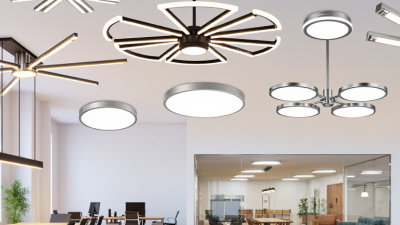
10 Best Ceiling Lighting Options for Global Buyers
Choosing the right ceiling light is more than comparing shapes, prices, and shiny product photographs. For global buyers, performance, safety, installation, and long-term value matter equally. This guide explores 10 Best Ceiling Lighting Options for Global Buyers, covering practical choices for homes, offices, hotels, retail spaces, and public interiors.
A successful Lighting Ceiling solution should match the room’s purpose. A warm pendant can soften a dining area, while a recessed LED panel may provide even light across a workspace. Buyers should check lumen output, color temperature, color rendering, beam angle, dimming compatibility, and expected lifespan. In humid locations, an appropriate IP rating can protect the fixture from moisture. Voltage compatibility also deserves careful attention, especially when products cross borders.
Real purchasing experience shows that appearance alone often creates problems. A beautiful fixture may cast harsh shadows, require difficult wiring, or arrive with fragile components. Measure the ceiling height first. Review installation instructions. Confirm certifications, warranty terms, replacement parts, packaging quality, and supplier communication before ordering. Reliable manufacturers should provide clear technical data and consistent product samples.
Details matter most.
Still, no lighting choice is perfect. A low-cost fixture can be efficient but less flexible, while a premium design may exceed a project’s budget. Buyers should compare total ownership costs, not only the initial price. This article offers a balanced starting point, though local electrical guidance and qualified installation remain essential for every project.
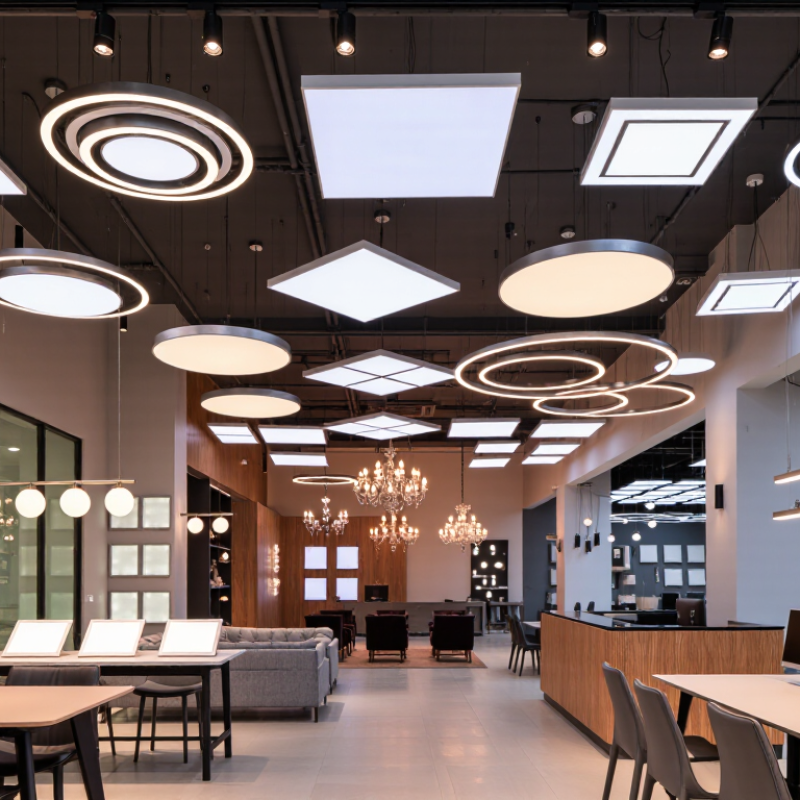
Ceiling Lighting Fundamentals: Lighting Uses About 15% of Global Electricity (IEA)
Ceiling lighting is not merely a decorative purchase. It affects energy demand, visual comfort, safety, and operating costs across homes, offices, hotels, and warehouses. The International Energy Agency estimates that lighting consumes about 15% of global electricity. That figure makes every ceiling fixture worth examining. Small inefficiencies multiply across thousands of rooms.
The ten most practical options include recessed panels, surface-mounted fixtures, linear lights, track systems, pendant lights, troffers, downlights, flush mounts, smart fixtures, and daylight-linked systems. Compare lumens, not watts, because lumens measure useful light output. The U.S. Department of Energy reports that LED lighting can use at least 75% less energy than incandescent lighting and last up to 25 times longer.
However, high efficacy alone does not guarantee a good installation. A glaring 6,000-lumen panel may waste comfort, even when it saves electricity. Check color temperature, color rendering, beam angle, glare control, dimming, and local voltage compatibility.
The IEA also identifies efficient lighting and controls as important tools for reducing electricity demand. In practice, occupancy sensors can prevent empty corridors from staying fully lit. Daylight sensors can reduce output near windows. Still, controls are often installed badly. False triggers and poor commissioning frustrate users. I have seen buyers prioritize a low unit price, then replace uncomfortable fixtures within months. A better decision records room size, ceiling height, maintenance access, and expected daily operating hours before comparing suppliers.
The Ten Options: LEDs, Pendants, Chandeliers, Flush Mounts, and More
Ceiling lighting should balance efficiency, comfort, installation, and local electrical standards.
The U.S. Department of Energy reports that LED lamps use at least 75% less energy and last up to 25 times longer than incandescent lamps. For global buyers, the ten practical options are LEDs, pendants, chandeliers, flush mounts, semi-flush mounts, recessed lights, track lights, linear fixtures, smart ceiling lights, and fan lights. Each suits a different room and ceiling height.
LED panels provide broad, even light for kitchens and offices.
Pendants place focused light above tables, while chandeliers create a stronger visual feature in dining rooms. Flush mounts work well under low ceilings. Semi-flush designs add depth without needing much clearance.
Recessed lights keep sightlines clean, but poor spacing can create dark patches.
Track lights help flexible retail or studio layouts. Linear fixtures suit long counters and workspaces.
Smart ceiling lights offer scheduling and dimming, yet compatibility can be difficult across countries.
Fan lights combine air movement and illumination, although their shadows may disturb reading areas. The International Energy Agency estimates that lighting consumes about 15% of global electricity use, making efficiency more than a style decision.
Check voltage, frequency, socket type, color temperature, and safety certification before ordering. Moist rooms need suitable ingress protection.
I would avoid choosing only by lumen output; glare and beam angle matter too. My own preference changes by room, which is inconvenient but realistic.
Performance Metrics: LED Efficiency, 25-Year Life, CCT, and CRI (DOE)
10 Best Ceiling Lighting Options for Global Buyers
Performance Metrics: LED Efficiency, 25-Year Life, CCT, and CRI (DOE)
For global buyers, ceiling lighting should be judged by measured performance, not showroom brightness. The U.S. Department of Energy reports that LED products use at least 75% less energy than incandescent lighting and can last up to 25 times longer. A 25-year claim usually assumes about three hours of daily operation and a 25,000-hour rated life. Actual service life may fall with heat, unstable voltage, poor drivers, or enclosed fixtures. That detail is easy to miss.
Efficiency still needs context. Lumens per watt shows light output, but it does not reveal glare, flicker, or maintenance quality. DOE solid-state lighting reports identify continued progress toward higher efficacy, while field experience shows that thermal design often decides long-term reliability. Buyers should request LM-80 and TM-21 documentation for LED components, plus test reports from accredited laboratories. Numbers without test conditions are weak evidence.
CCT changes the room’s visual character. Warm white, around 2700–3000K, suits bedrooms and hospitality spaces; 3500–4100K feels cleaner in offices; 5000K and above can appear harsh indoors. CRI 80 is common for general areas, while CRI 90 or higher better protects skin tones, food color, and merchandise appearance. CRI is not perfect. It may overlook saturated red performance, so R9 data deserves attention. The International Energy Agency also continues to identify efficient lighting as a practical route to lower electricity demand, but installation quality remains the uncomfortable variable.
10 Best Ceiling Lighting Options for Global Buyers
Performance benchmarks for LED efficacy, expected service life, correlated color temperature (CCT), and color rendering index (CRI).
Values are representative category benchmarks based on commonly available LED ceiling-light specifications and DOE lighting metric definitions. LED service life is shown in thousands of hours; 25 years equals approximately 27.4 thousand hours at 3 hours of daily use. Actual performance varies by product design, operating temperature, controls, and installation conditions.
Global Safety Standards: IEC 60598, IP Ratings, Voltage, CE, and UL
For global ceiling-lighting buyers, compliance begins with IEC 60598. This standard addresses construction, insulation, wiring, temperature, and mechanical safety. A fixture should match its intended installation environment. Check the test report, not only a printed logo. Small details matter, including terminal spacing and earth continuity.
IP ratings describe protection against dust and water under IEC 60529. IP20 suits dry indoor rooms. IP44 offers better protection near bathroom splashes. IP65 is more suitable for dusty or exposed areas. However, IP ratings do not prove impact strength or complete weather resistance. The test conditions can be narrower than real buildings. That deserves attention.
Voltage errors remain common. A 110–120 V fixture may fail on a 220–240 V circuit. Frequency, dimming compatibility, and surge protection also require confirmation. CE indicates conformity with applicable European requirements; it is not a universal quality certificate. UL evaluation can support acceptance in North American projects, but buyers should verify the exact standard and product scope. The International Energy Agency’s 2024 Energy Efficiency report estimates that lighting consumes about 15% of global electricity. Efficient lighting therefore affects both operating costs and emissions. Procurement teams should request photometric files, safety reports, voltage labels, and installation instructions. They should also inspect samples physically. Reports help. Hands-on checks still matter.
Buyer Selection Framework: Room Use, Energy Codes, Installation, and Total Cost
10 Best Ceiling Lighting Options for Global Buyers
Buyer Selection Framework: Room Use, Energy Codes, Installation, and Total Cost
Choosing ceiling lighting starts with the room, not the fixture’s appearance. A kitchen needs bright, shadow-controlled light over worktops. Bedrooms usually benefit from softer, dimmable illumination. For corridors, compact flush lights can reduce visual clutter. Other practical options include recessed lights, pendant fixtures, track systems, surface-mounted panels, and moisture-rated bathroom lights.
Energy codes vary by country, city, and building type. Check required efficiency, standby power, color temperature, and controls before ordering. Some projects also require certified electrical components or specific ingress protection ratings. A product may meet one market’s rules but fail another inspection. That detail is easy to miss.
Installation conditions deserve equal attention. Confirm ceiling height, wiring access, junction-box size, voltage, and mounting hardware. Concrete ceilings may require different anchors than timber ceilings. I once underestimated cable length on a renovation, and the installation became slower and more expensive. Measure twice. Ask for clear technical drawings and replacement parts.
Total cost includes shipping, duties, labor, lamps, controls, maintenance, and future energy use. A low purchase price can become costly when installation requires an electrician or special equipment. Compare five-year operating costs, not only the invoice. For large orders, request samples and test glare, color consistency, heat, and dimming performance in the actual room. Some selections still look acceptable on paper but feel uncomfortable after installation.
Related Posts
-
10 Best Ceiling Lighting Suppliers for Global Buyers
-
Unveiling the Future of Lighting Ceiling Solutions at the 137th Canton Fair Guangzhou 2025
-
Exploring Alternatives to Best Ceiling Led Lights for Your Home
-
2026 How to Choose the Right LED Fixtures for Your Home Lighting Needs?
-
How to Choose the Perfect Light and Lamps for Your Home or Office
-
2026 Best Menu Lighting Ideas for Restaurants and Cafes?