What Is Concert Lighting and How Does It Work?
Concert Lighting is more than bright beams and dramatic color. It is a coordinated system that shapes what audiences see, feel, and remember. Light artist James Turrell once said, “Light is not so much something that reveals, as it is itself the revelation.” His observation offers a useful lens for understanding live performance: light can direct attention, create depth, and change the mood of a stage.
In practical terms, Concert Lighting combines fixtures, control consoles, programming, and careful timing. A designer may use moving lights to follow a singer, soft washes to reveal a band, or narrow beams to cut through haze. Each choice depends on the venue, the music, and the people performing. Even a small shift in color can make a quiet verse feel intimate—or a chorus feel enormous. Not magic. Skilled coordination.
This guide explores how the equipment works, how lighting cues are designed, and how crews adapt a show to different stages. It also considers safety, sightlines, and the limits of technology. A console can trigger hundreds of changes, but it cannot make every creative decision for the designer. Sometimes a cue misses the emotional mark. That deserves a second look. Understanding Concert Lighting means seeing both the technical craft and the human judgment behind each moment.
What Concert Lighting Is and the Purposes It Serves
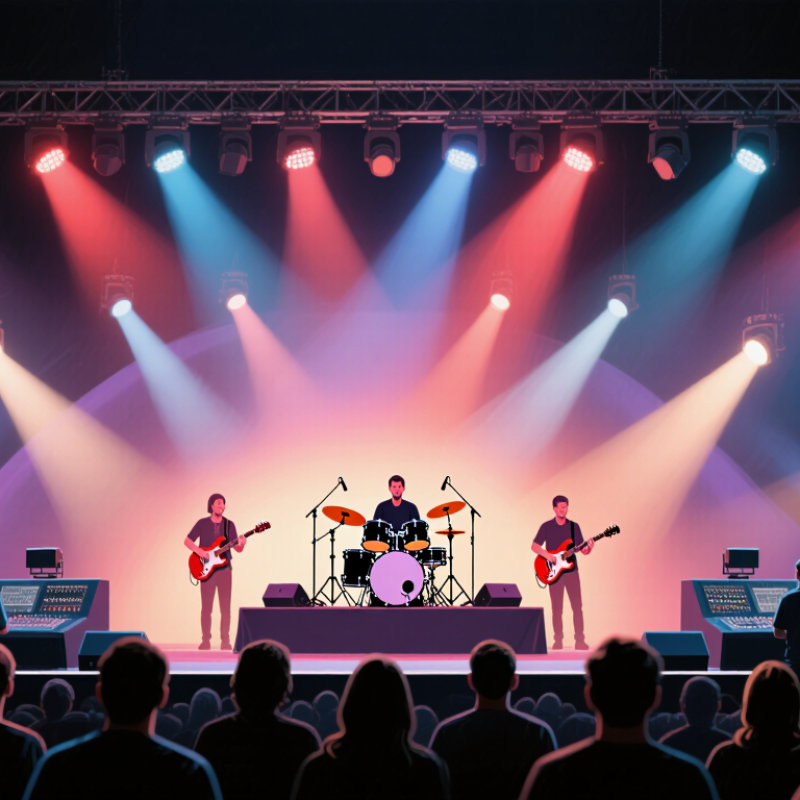
Concert lighting is the planned use of light to make a live performance visible and shape how it feels. A lighting designer combines fixtures, control systems, and timed cues to illuminate performers, scenery, and selected parts of the stage. The work starts before the show: the crew considers the venue, sightlines, stage layout, and the performers’ movements. A bright, focused beam can draw attention to a soloist, while softer light can make a group scene feel more open. Small details matter.
Lighting serves practical and creative purposes. It helps audiences see faces, gestures, and instruments, even from the back of a large room. Changes in color, brightness, and direction can suggest a shift in mood or mark a transition between songs. Carefully timed flashes may echo a strong beat, but constant effects can distract from the music. Restraint is useful. In practice, a cue that looks dramatic during rehearsal may feel too harsh from a seat near the stage. Crews adjust levels and angles during setup, balancing visibility with atmosphere. The result is not just decoration; it is a changing visual layer that supports the performance without replacing it.
What Is Concert Lighting and How Does It Work?
Concert lighting shapes visibility, mood, and visual focus. Color temperature is one tool lighting designers use to create different looks.
Common reference points: warm tungsten light is around 3,200 K, while daylight-balanced sources are often around 5,600 K. These are illustrative settings, not fixed rules; concert fixtures can produce a much wider range of colors.
The Main Fixtures and Equipment Used in Concert Lighting
Concert lighting uses several fixture types, each shaping a different part of the stage. LED wash lights spread even color across performers, while profile fixtures create sharper edges and controlled shapes. Beam lights produce narrow shafts that move through the room. Followspots keep a solo performer visible during a changing scene. The effect depends on distance, angle, and brightness—not just the fixture itself. Small details matter.
The fixtures need a control system and reliable support equipment. A lighting console sends cues to fixtures through DMX or a network-based control protocol. Dimmers may be used with some conventional fixtures, while many LED units manage output internally. Trusses, clamps, safety bonds, power distribution, and data cables keep the system in place and connected. Every hanging fixture needs suitable hardware and a load-rated support structure. A loose cable can disrupt a cue, so crews secure and test connections before doors open.
Good equipment choices start with the venue, stage size, and performance style. A small club may need only a few washes and focused specials; a wide festival stage often needs more coverage and backup planning. Haze can reveal light beams, but it should be used only when venue conditions allow. More fixtures do not automatically make a better show. A common planning mistake is choosing dramatic effects before checking whether performers’ faces will remain clear.
How Lighting Signals Travel from the Control Desk to the Stage
Concert lighting cues travel from the control desk as digital instructions, not as electrical power for each lamp. The operator builds a cue, setting values such as brightness, color, and movement. Pressing “Go” sends those values through a lighting network.
In smaller rigs, a DMX512 cable may carry the signal directly; larger systems often use Ethernet to reach network nodes near the stage. Each node converts the data into the format a fixture can read.
Every fixture listens for assigned channel addresses. A wrong address can make a light respond to another fixture’s cue, or not respond at all. The signal path is usually console, network switch, node, then fixture, though the exact setup varies. Power cables follow a separate path.
During setup, technicians check connections, addresses, and data activity before rehearsing cues. Small details matter. A loose connector can interrupt a whole run of fixtures. It is easy to over-trust the console screen; it may show a command was sent, not that the stage received it. Watching the actual lights during a test is still essential. One cue may look precise on a monitor and feel late in the room, so timing deserves a second look.
How Lighting Designers Coordinate Cues with Music and Performance
Lighting designers coordinate cues by treating music and stage action as one moving timeline. They mark song sections, tempo changes, breaks, and key moments in a cue sheet. During rehearsal, a lighting operator may follow timecode, a conductor, or clear hand signals, depending on the production. A sharp white flash might hit with a drum accent, while a slow color shift can follow a quieter passage. Small changes matter.
The plan also has to leave room for performers. A cue timed to a lyric may feel late if the singer holds a note, so designers often prepare flexible triggers. They check sightlines, brightness, and transitions from several seats, not only from the control position. Haze, reflective costumes, and moving scenery can change how a beam reads. The room has a vote.
Rehearsals reveal what paper cannot. Designers adjust cue timing with the music director, performers, and stage crew, then record the revised choices so each show stays consistent. A technically precise cue can still feel emotionally wrong; that judgment is difficult to measure. Sometimes a simple fade supports the moment better than a dramatic effect. I would not assume every musical accent deserves a lighting hit. The restraint can be part of the design.
How Color, Movement, and Brightness Shape the Concert Experience
Concert lighting turns a stage into a visual rhythm. Color can signal a shift before the music changes: cool blue may quiet a scene, while saturated red can make a drum hit feel sharper. Movement adds direction. A narrow beam sweeping across the crowd pulls attention outward; a still, warm wash keeps faces visible and intimate. Brightness matters too. A sudden white flash creates contrast, but constant maximum output can flatten the stage and tire the eyes. Color sets expectation. Timing makes it land.
Design choices also have practical limits. The U.S. Department of Energy’s Energy Saver guidance reports that LEDs use at least 75% less energy and can last up to 25 times longer than incandescent lamps. That comparison is a broad lighting benchmark, not a direct test of concert fixtures, which vary in output and operating conditions. The International Energy Agency estimates lighting accounts for about 15% of global electricity use, underscoring why efficiency matters beyond one venue. Still, the most efficient cue is not always the best cue. A slow color change may look beautiful from the balcony and dull from the floor. Designers need to check sightlines, skin tones, haze, and camera exposure in the actual room. Sometimes the honest choice is less movement. The audience may notice the mood, not the fixture.