How to Master the Sand Molding Process for Perfect Castings?
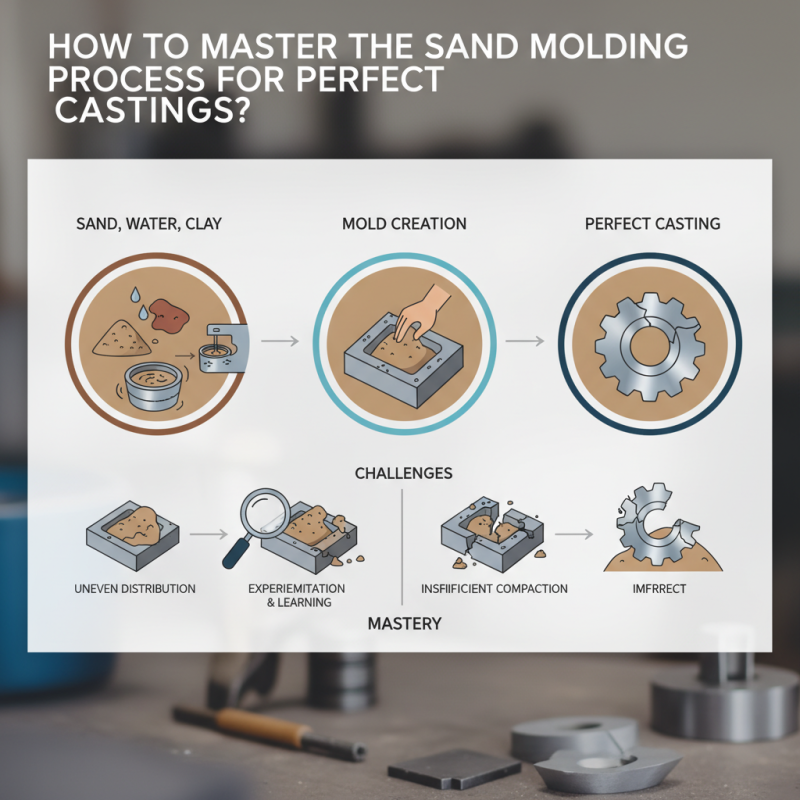
The sand molding process is essential in creating perfect castings. It involves several critical steps that require precision and attention to detail. The right mixture of sand, water, and clay can determine the quality of the final product.
Many craftsmen face challenges during this process. Uneven sand distribution often results in defects. Insufficient compaction can lead to weak molds that break easily. Each mistake can ripple through the casting process, affecting the final outcome.
To master the sand molding process, one must embrace experimentation. Learn from failures and adjust techniques accordingly. Understanding the intricacies of this method is vital for producing reliable and high-quality castings.
Understanding the Basics of Sand Molding in Metal Casting
Sand molding is a crucial technique in metal casting, essential for producing high-quality castings. This method uses sand to create molds for pouring molten metal. According to industry reports, around 70% of all metal castings in the U.S. are created using sand molds. This fact highlights the importance of understanding the intricacies of this process.
Mastering sand molding involves several key aspects. Grain size, for instance, plays a significant role. A finer grain can enhance the detail of castings. However, using too fine a sand may lead to difficulties in mold strength. Moisture content is another factor that impacts casting quality. Reports indicate that a moisture level of 2-4% is optimal. Excess moisture can cause defects like gas porosity.
Despite its advantages, sand molding isn't without challenges. One common issue is sand adhesion. This can affect the finish of the casting. Operators often grapple with balancing sand preparation and molten metal temperature. A lack of experience can lead to inconsistencies in the final product. Continuous learning and adjustments are essential for improving the sand molding process.
Essential Materials and Tools for Sand Molding Process
The sand molding process requires specific materials and tools to achieve optimal results. First, you need high-quality sand. This sand should be fine and well-graded. Coarse sand can create defects in your castings. It’s crucial to mix the sand with a suitable binder. Common binders include clay and resin. The right mix ratio is vital. Too much binder can make the mold too rigid.
In addition to sand and binder, you'll need a few essential tools. A mold box is necessary to shape the sand correctly. Without it, you may struggle with stability. Use a ramming tool to compact the sand. Compaction is key for a strong mold. If the sand is too loose, it may collapse during pouring.
Don't overlook the importance of ventilation. Proper airflow helps to prevent trapping gases. This reduces defects in your casting. Also, check your patterns carefully. Imperfections in patterns can lead to flaws in the final product. Mistakes happen, and learning from them is crucial. Each casting teaches valuable lessons. Take time to reflect on what went wrong and how to improve. This mindset will enhance your sand molding process.
Step-by-Step Guide to Creating a Sand Mold
Creating a sand mold is an essential step in the casting process. Start by selecting the right type of sand. Fine, uniform grains work best. Mixing it with a bonding agent helps improve strength. This mixture will give your mold the stability needed for casting. Keep the sand dry, but not too dry. Aim for a nice consistency.
Next, pack the sand tightly around your pattern. Ensure there are no air pockets. These can ruin the final piece. After packing, it's time to remove the pattern. Do this carefully to avoid disturbing the mold. A well-crafted mold will have clear details. But sometimes, the mold can break or collapse. Learning how to fix these issues is crucial.
Finally, make sure to examine your mold before pouring molten metal. Look for cracks or weak spots. Even small flaws can lead to defects in the casting. This reflection process is key. The more you practice, the better your molds will become. Overcoming challenges helps in mastering the sand molding process. Each attempt provides valuable lessons.
Mastering the Sand Molding Process: Overview of Defect Rates
Common Pitfalls in Sand Molding and How to Avoid Them
In the sand molding process, common pitfalls can affect casting quality. According to the American Foundry Society, up to 60% of defects in castings stem from issues in the molding process. One frequent issue is uneven sand compaction. If the sand is not packed uniformly, it leads to weak spots in the mold. These weak areas can result in defects like cracks or surface imperfections on the final casting. It's crucial to monitor the moisture content of the sand. Too much moisture can cause the sand to clump, while too little can lead to poor bonding.
Another major concern is sand contamination. If foreign materials, such as dust or oil, mix with the molding sand, it impacts the mold's integrity. This contamination often goes unnoticed until the casting process begins. A 2023 industry report indicated that nearly 30% of casting defects are related to contamination. Regular checks and clean-ups can mitigate these risks. Ensuring the use of high-quality, clean sand is essential in achieving optimal results.
Moreover, not accounting for temperature variations can lead to poor casting quality. Sand molds can expand or contract based on temperature changes, affecting the final dimensions. A study by the Foundry Industry Group noted a 20% increase in dimensional inaccuracies due to unregulated temperature conditions. It's vital to maintain a consistent environment to minimize these errors. Proper training and awareness of these pitfalls can lead to superior casting outcomes.
Finishing Techniques for Perfect Castings After Sand Molding
Finishing techniques are crucial after the sand molding process. They significantly enhance the quality of castings. According to industry reports, nearly 30% of casting defects stem from poor finishing methods. Identifying and addressing imperfections can save time and money in production.
One common technique is shot blasting. This method helps remove sand residues and surface imperfections. However, excessive blasting can lead to a surface that is too rough, resulting in difficulties during further processing. Another technique is polishing, which can produce a smooth finish. Yet, it requires careful control of parameters to avoid material loss.
Sanding is often overlooked but essential. It can refine the surface more than just shot blasting alone. However, if done improperly, it may create scratches or uneven surfaces. Continuous monitoring of operator skills is necessary to prevent these issues. Each technique has its pros and cons, requiring skilled workers to choose wisely.