What is Outdoor LED Lighting? Benefits, Types, and Uses Explained
Outdoor LED lighting has revolutionized the way we illuminate our surroundings, providing not only efficiency but also enhancing safety and aesthetics in various environments. According to a report by the U.S. Department of Energy, outdoor lighting accounts for about 30% of the total energy use in commercial buildings, making the transition to LED technology an important consideration for energy conservation. With their long lifespan and low energy consumption, outdoor LEDs have emerged as a leading choice for municipalities, businesses, and homeowners alike.
The benefits of outdoor LED lighting extend beyond energy savings; they also include improved visibility and security. Research indicates that well-lit areas can reduce crime rates significantly, as light deters criminal activity. Additionally, the versatility of outdoor LED fixtures allows for various applications, from streetlights and parking lots to pathways and gardens, enhancing the overall appeal and functionality of outdoor spaces. With ongoing advancements in technology, the adoption of outdoor LED lighting continues to grow, reflecting a shift towards smarter, more sustainable urban planning and landscape design.

What is Outdoor LED Lighting?
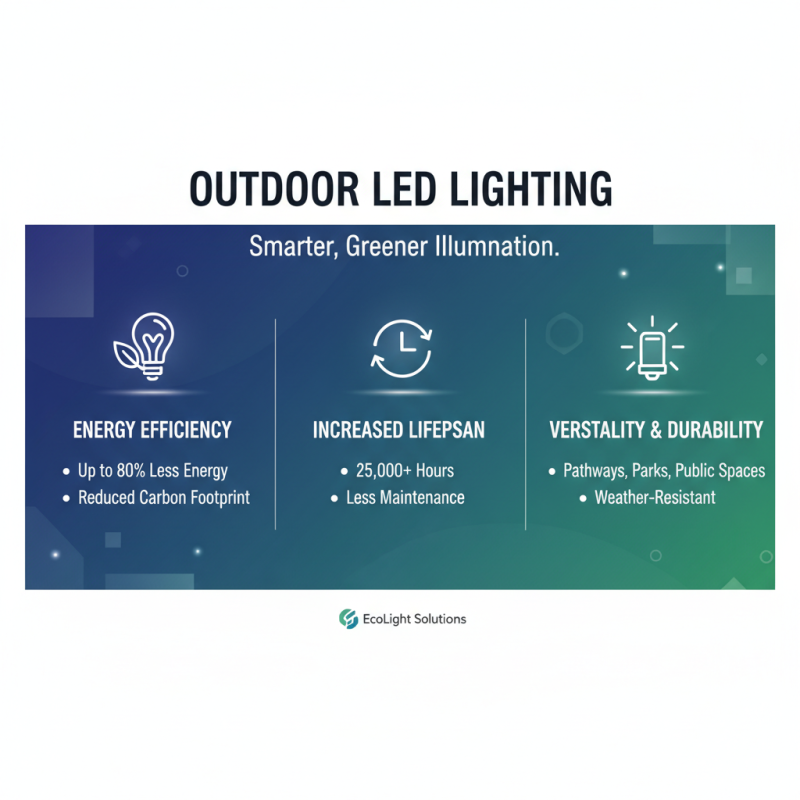
Outdoor LED lighting refers to the use of light-emitting diode technology for various outdoor spaces, providing illumination that is energy-efficient, durable, and versatile. Unlike traditional lighting solutions, LED lights consume significantly less energy—up to 80% less than incandescent bulbs—while offering a longer lifespan, often exceeding 25,000 hours. This makes them an attractive option for lighting pathways, parks, public squares, and commercial outdoor areas.
The applications of outdoor LED lighting are extensive. Not only do they enhance safety and security by improving visibility, but they also contribute to aesthetic appeal through decorative lighting in gardens and architectural features. According to the U.S. Department of Energy, the widespread adoption of LED lighting is projected to save about 190 terawatt-hours of electricity by 2027, equating to approximately $15 billion in energy costs. This significant reduction can influence municipalities and commercial entities to adopt LED technology widely.
Tips: When selecting outdoor LED lighting, consider brightness measured in lumens, the color temperature that suits your environment, and the ingress protection (IP) rating for weather resistance. Also, leveraging smart lighting solutions can enhance control over energy usage, ensuring efficiency and flexibility in outdoor lighting design.
Key Benefits of Outdoor LED Lighting
Outdoor LED lighting offers a range of advantages that make it an increasingly popular choice for illuminating outdoor spaces. One of the primary benefits is energy efficiency. LED lights consume significantly less power compared to traditional incandescent or fluorescent lighting. This not only reduces energy bills but also contributes to lowering carbon footprints, making outdoor LED lighting a more environmentally friendly option. Additionally, the long lifespan of LED lights means less frequent replacements, further saving costs and resources over time.
Another compelling benefit of outdoor LED lighting is the enhanced visibility it provides. Whether for security purposes, landscaping, or recreational areas, proper illumination ensures safer navigation and deters potential intruders. With various color temperatures available, LED lighting can create a welcoming atmosphere or highlight specific features in the environment, enriching both the aesthetic appeal and functionality of outdoor areas. Overall, the versatility and durability of outdoor LED lighting make it an ideal choice for both residential and commercial applications.
Types of Outdoor LED Lighting Fixtures
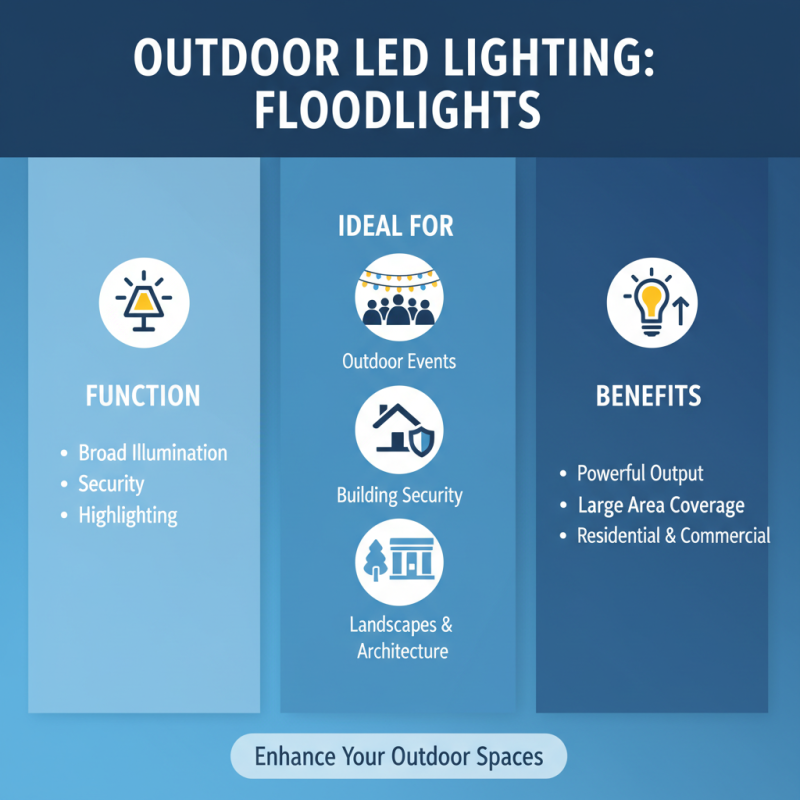
Outdoor LED lighting fixtures come in a variety of types, each designed to serve specific functions and enhance outdoor spaces effectively. One common type is flood lights, which provide broad illumination and are ideal for outdoor events, security lighting, and highlighting features such as buildings and landscapes. Their powerful output ensures that larger areas are well-lit, making them a popular choice for both residential and commercial applications.
Another popular fixture is landscape lighting, which includes path lights, spotlights, and garden lights. These fixtures are designed to accentuate gardens, pathways, and architectural features while adding aesthetic value to outdoor environments. Path lights enhance safety by illuminating walkways, while spotlights can be used to highlight trees or sculptures, creating a visually dynamic atmosphere. Additionally, wall-mounted lights and post lights serve to provide functional lighting along driveways or patios, enhancing usability while contributing to the overall beauty of outdoor settings. Each type of outdoor LED lighting fixture plays a vital role in transforming open spaces into welcoming areas that combine functionality with design.
Common Uses of Outdoor LED Lighting
Outdoor LED lighting is being increasingly adopted in various settings due to its versatility and efficiency. One of the most common uses of outdoor LED lighting is in residential settings, where it enhances security and aesthetics. Homeowners often use LED floodlights, pathway lights, and spotlights to illuminate walkways, gardens, and patios, creating a welcoming atmosphere while also deterring potential intruders. Additionally, LED lighting is energy-efficient, which translates to lower electricity bills and a reduced environmental footprint.
Commercial spaces also benefit significantly from outdoor LED lighting. Retailers utilize LED signage and decorative lights to attract customers and create an inviting shopping experience. Parking lots equipped with LED lights improve safety for both patrons and employees by ensuring well-lit environments. Furthermore, outdoor LED lighting is ideal for public spaces, such as parks and plazas, enhancing usability during evening hours and fostering social interactions.
Tips: When planning outdoor lighting, consider using timers or smart controls to automate lighting schedules, ensuring that lights operate only when needed. Opt for motion sensor lights in less frequented areas to maximize energy savings and provide security. Lastly, choose fixtures that complement the surrounding environment for a cohesive look while maximizing functionality.
Best Practices for Installing Outdoor LED Lights
When installing outdoor LED lights, it is crucial to follow best practices to ensure both safety and functionality. First, consider the location and purpose of the lighting. Different areas, such as pathways, patios, or gardens, may require specific types of fixtures to maximize visibility and enhance the ambiance. Properly assessing the layout will help to avoid dark spots and ensure evenly distributed lighting. Additionally, installation should be done at an appropriate height to prevent glare and ensure efficient illumination.
Next, focusing on energy efficiency is essential. Use LED lights that minimize energy consumption while still providing adequate brightness. Selecting fixtures with motion sensors or timers can further enhance efficiency, allowing lights to operate only when needed. Ensure that all electrical connections are weatherproof, using appropriate outdoor-rated fixtures and wiring to withstand the elements. Regular maintenance and occasional cleaning of light fixtures can also prolong their lifespan and maintain optimal performance.
Benefits of Outdoor LED Lighting