What Are the Top Ceiling LED Lights?
Choosing the best Ceiling Led light is not simply a matter of selecting the highest wattage. A comfortable room needs balanced brightness, controlled glare, accurate colour, and dependable heat management. The ideal fixture should illuminate desks, floors, and wall surfaces without creating harsh reflections on screens or polished furniture. It should also match the room’s ceiling height, wiring condition, insulation, and daily use.
Lighting researcher Dr. Ian Ashdown has said, “Good lighting is about visual comfort, not brightness alone.” That principle is useful when comparing modern Ceiling Led products. Look for a suitable colour temperature, such as warm white for bedrooms or neutral white for kitchens and offices. Check the colour rendering index as well. A high CRI can make wood, fabric, food, and skin tones appear more natural. Dimming compatibility matters too. A beautiful light becomes frustrating when it flickers, buzzes, or refuses to dim smoothly.
Real-world testing still matters. Stand beneath the fixture. Read a page. Notice shadows around your eyes and hands. Some thin panels look impressive online but feel flat or overly cold in a lived-in room. This is where my own judgement becomes less certain: specifications are valuable, yet they cannot fully predict personal comfort. Energy labels, warranty length, driver quality, and safety certifications deserve equal attention. The top Ceiling Led light is therefore not one universal model. It is the fixture that performs quietly, comfortably, and reliably in its actual space.
Definition and Key Features of Ceiling LED Lights
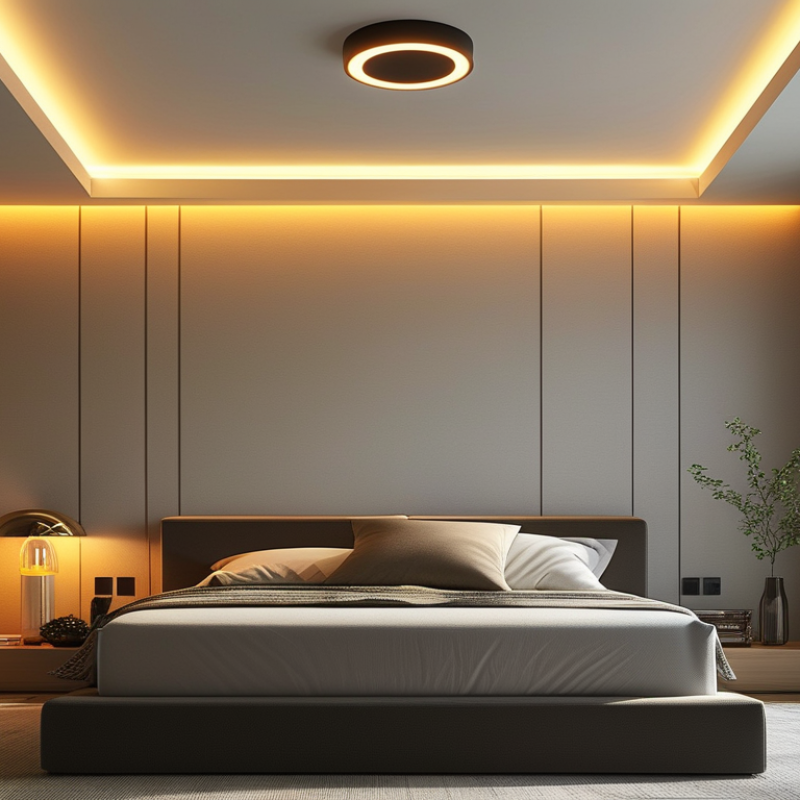
Ceiling LED lights are electric fixtures mounted on a ceiling to provide general, task, or accent lighting. They use light-emitting diodes, which convert electricity into light more efficiently than traditional bulbs. Unlike hanging fixtures, many ceiling LED models sit close to the surface. This helps in rooms with low ceilings. Their main features include brightness, color temperature, color rendering, dimming ability, and heat management. Brightness is measured in lumens, not watts. A 2,000-lumen fixture can suit a medium-sized living room, depending on wall color and ceiling height. That number matters.
Color temperature changes the room’s atmosphere. Warm white light can make a bedroom feel softer, while neutral white light often supports kitchens and work areas. A high color rendering index helps colors appear more natural. This is useful near mirrors, kitchen counters, and wardrobes.
Some fixtures offer adjustable tones or motion sensors. However, smart functions can add complexity. I once chose excessive controls for a small room and rarely used them.
Good ceiling LED lights should distribute light evenly, without dark rings or sharp glare. A frosted diffuser usually creates gentler illumination. Check the fixture’s dimmer compatibility before installation. Poor matching may cause flickering or buzzing.
Look for clear safety markings, suitable ceiling support, and accessible installation instructions. Integrated LEDs can look clean, but replacing the whole fixture may be harder later. An electrician should inspect wiring when the ceiling connection looks old or damaged.
Types of Ceiling LED Lights and Their Best Uses
What Are the Top Ceiling LED Lights?
Types of Ceiling LED Lights and Their Best Uses
Flush-mount ceiling LEDs sit close to the ceiling and suit bedrooms, hallways, and low rooms. Their wide diffusion reduces dark corners. ENERGY STAR’s residential lighting data highlights LEDs for their lower energy use and longer rated life than traditional lamps. Still, a bright fixture can feel uncomfortable in a small bedroom. Choose 800–1,500 lumens for modest spaces and a warm 2,700–3,000K color temperature.
Recessed LED downlights create a cleaner, architectural look. They work well above kitchen counters, desks, and shower areas when the housing has the correct damp-location rating. The U.S. Department of Energy’s Solid-State Lighting R&D Plan identifies efficiencies above 200 lumens per watt as a research benchmark. Household products usually deliver less. That gap matters when comparing specifications.
Pendant LEDs provide focused light over dining tables, islands, and reading chairs. Track-style ceiling lights offer adjustable beams, making them useful for artwork or changing furniture layouts. For offices, garages, and workshops, LED panels spread light evenly and reduce visible glare when paired with proper diffusers. The International Energy Agency’s Energy Efficiency 2023 report notes that LEDs now represent a major share of global lighting sales, reflecting their efficiency and durability. Yet efficiency alone is not enough. Check dimmer compatibility, color rendering, heat control, and replacement access. I still find the simplest fixture is often the easiest to live with.
How to Compare Brightness, Color, Size, and Energy Efficiency
Choosing a top ceiling LED light starts with the room, not the fixture’s appearance. Brightness should be compared in lumens, because wattage only measures electricity use. A small bedroom may need 1,000 to 2,000 lumens. A kitchen often needs 3,000 to 5,000 lumens, especially above work surfaces. Too much light can cause glare. I learned this after installing a bright panel above a reflective countertop. The room looked modern, but my eyes felt tired.
Color temperature changes the room’s mood and usefulness. Warm white, around 2,700–3,000K, suits bedrooms and dining areas. Neutral white, around 3,500–4,000K, works well in kitchens and home offices. Cool white can support detailed tasks, though it may feel harsh at night. Check the color rendering index, or CRI. A CRI of 80 or higher is practical, while 90 or higher can show food and fabrics more naturally. Size matters too. Measure twice. A large fixture can overwhelm a low ceiling, while a small one may leave dark corners. A common sizing rule helps, but it is not universal.
Energy efficiency depends on lumens per watt, not low wattage alone. Compare the stated efficacy, expected lifespan, and annual energy use. Dimming compatibility also matters. Some lights flicker when paired with unsuitable dimmers. I have trusted attractive specifications before and missed that detail. Look for clear safety testing, warranty terms, and replacement information. No comparison is flawless; real room conditions can change the result.
Top Ceiling LED Light Options for Different Rooms
What Are the Top Ceiling LED Lights?
Top ceiling LED light options depend on the room, ceiling height, and daily activities. In a kitchen, choose a bright fixture with a neutral white color temperature around 3500K to 4000K. High color rendering helps vegetables and food appear more natural. A slim, flush-mounted light works well beneath low ceilings. Look for even diffusion, because exposed LED points can create harsh shadows on countertops. Measure twice.
In a bedroom, warmer light around 2700K to 3000K usually feels calmer. A dimmable ceiling fixture can support reading, dressing, and winding down. I once installed a light that looked attractive online but felt too bright at night. The room needed softer illumination. Appearance is not enough. Check the actual light output and dimming compatibility before buying.
Bathrooms require careful selection. Choose a fixture rated for damp locations, especially near showers or sinks. A neutral white tone can help with grooming without making skin look gray. For hallways and entryways, compact lights with wide distribution reduce dark corners and improve movement after sunset.
In a living room, layered lighting often feels better than one powerful ceiling lamp. Combine moderate overhead light with floor or wall lighting. Small details matter, but installation quality matters more. Have a qualified professional check wiring when the existing connections are uncertain.
Installation, Safety, Maintenance, and Replacement Considerations
What makes a ceiling LED light “top” is not maximum brightness. It is the right balance of efficacy, glare control, color quality, and serviceability. Installation determines whether those specifications matter. Switch off the circuit breaker before work, then verify isolation with a tested meter. Do not rely on the wall switch. Secure the fixture to a rated junction box, preserve cable strain relief, and follow insulation-clearance and damp-location requirements. An electrician should review unfamiliar wiring, overloaded circuits, or bathroom installations. That is not overcautious.
Safety data supports this discipline. NFPA home-fire research identifies electrical distribution and lighting equipment as recurring fire-risk categories. DOE Energy Saver guidance reports that LEDs use at least 75% less energy than incandescent lamps. It also says they can last up to 25 times longer. Still, longevity is conditional. Poor ventilation, excessive heat, and incompatible dimmers can shorten driver life.
Clean the diffuser with a dry microfiber cloth every few months, especially in kitchens. Never spray liquid into the housing. Flicker, delayed starts, buzzing, or brown marks can indicate driver failure or thermal stress. Many integrated fixtures require full replacement, not a bulb change. Keep the model number, color temperature, and cutout dimensions. Replacement becomes easier. This advice has limits. Older ceilings may hide brittle insulation or unsupported boxes. Pause when uncertain. Safety should outrank convenience.
Related Posts
-
Trustworthy Quality in Best Commercial Led Office Lighting from China for Global Buyers
-
Embracing 2025: Revolutionizing Industry with the Best LED Spotlights for Global Buyers
-
Revolutionizing Energy Efficiency: The Future of LED Lighting in Smart Homes and Offices
-

Solutions for Maximizing Yields with the Best LED Grow Light
-

Exploring Unique Alternatives to Best Led Grow Light for Your Indoor Garden
-
The Definitive Guide to Choosing Simple Lighting for Every Room in Your Home