
Top 10 LED Lighting Manufacturers in China
China’s LED lighting manufacturers serve projects ranging from warehouse retrofits to hotel renovations and municipal street lighting. Yet choosing ten suppliers requires more than comparing prices. Performance needs evidence. The International Energy Agency’s 2023 Lighting report states that LEDs represented around half of global residential lighting sales in 2022. Their share was approximately 5% in 2013. That growth makes supplier selection increasingly consequential for buyers managing energy costs, maintenance schedules, and replacement inventories.
Technical progress also deserves context. Isamu Akasaki, a pioneer of blue LEDs and a 2014 Nobel Physics laureate, said, “I never thought of giving up.” His persistence helped establish the technology behind today’s efficient white LEDs. For buyers researching Lighting Light products, that history offers a useful reminder: meaningful innovation takes sustained engineering. The U.S. Department of Energy reports that residential LEDs use at least 75% less energy than incandescent lighting. They can also last up to 25 times longer. Product quality still varies.
This guide examines leading Chinese LED manufacturers through practical purchasing criteria: product specialization, documented performance, manufacturing capabilities, and export support. Look beyond wattage. A warehouse buyer might compare measured efficacy, glare control, driver replacement access, and warranty exclusions before requesting samples. A hotel project may prioritize color consistency and dimming compatibility instead. Published specifications are useful, but they cannot establish how every delivered batch will perform. A top-ten shortlist therefore provides a starting point; sample testing and project-specific verification remain essential before placing an order.
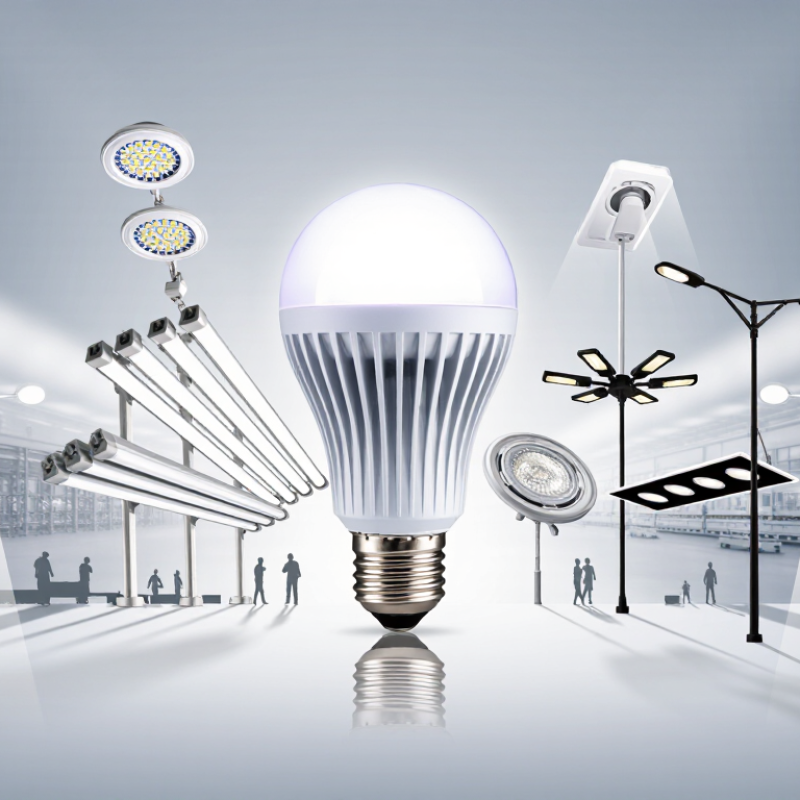
Overview of China’s LED Lighting Manufacturing Industry
China’s LED lighting industry brings together component suppliers, fixture manufacturers, testing laboratories, and export logistics providers. Major production clusters include Guangdong, Zhejiang, and Jiangsu. Their supplier networks support products ranging from residential downlights to industrial high-bay fixtures. Production capabilities vary. Some factories assemble purchased components, while others handle optical design, aluminum housings, driver integration, and thermal testing internally. This distinction affects customization, lead times, and technical support. A polished showroom, however, reveals little about production consistency.
Evaluating manufacturers requires more than comparing wattage and unit prices. Useful specifications include lumen output, efficacy, color rendering, flicker performance, and operating temperature. For example, a warehouse fixture needs suitable light distribution and reliable heat dissipation during extended operation. Request test reports that identify the exact product model and testing conditions. Certification requirements depend on the destination market and product category. Documentation needs checking. Even a promising sample cannot establish how consistently a factory will produce several thousand units. Price comparisons also become misleading when suppliers quote different drivers, housing materials, or warranty terms.
Tips: Send shortlisted factories the same specification sheet, including installation height, ambient temperature, beam angle, and expected operating hours. Ask whether component substitutions require written approval. Review sample performance alongside inspection records and warranty procedures. A small trial order can expose packaging weaknesses, although it cannot fully predict long-term reliability.
Criteria for Selecting the Top LED Lighting Manufacturers in China
Selecting manufacturers for a “Top 10” list requires evidence that buyers can verify. Factory size alone tells little about lighting performance or production consistency. Request photometric reports for the exact model, wattage, and beam angle under consideration. Check luminous efficacy, color rendering, and glare against your project requirements. For retail displays, compare samples for visible color differences across the same white wall. Samples reveal gaps. One attractive sample cannot establish consistency across thousands of fixtures.
Evaluate manufacturing controls through inspection records, component traceability, and documented testing procedures. Ask how workers identify defective drivers and separate rejected products. Request safety and electromagnetic compatibility reports relevant to your destination market. Verify report numbers, issuing laboratories, and whether documents cover the actual product configuration. LED package lifetime data can inform evaluation, but it does not prove complete fixture longevity. Driver failures, heat buildup, and poor sealing can shorten service life.
Commercial reliability deserves the same attention as technical specifications. Compare written lead times, replacement procedures, and warranty exclusions before negotiating unit prices. Ask who pays freight when failed fixtures require replacement. A cheaper quotation may omit surge protection or use a different driver. Trade-offs remain. An initial ranking should stay provisional until sample testing and a trial order provide stronger evidence. Even a factory visit offers only a snapshot of everyday production.
Top 10 LED Lighting Manufacturers in China - Criteria for Selecting the Top LED Lighting Manufacturers in China
Ten evidence-based criteria for evaluating LED lighting manufacturers in China, with measurable indicators and documentation to request.
| Selection Criterion | Measurable Indicators | Technical Reference or Interpretation | Evidence to Request |
|---|---|---|---|
| Electrical Safety | Electric shock protection, insulation, earthing where applicable, and operating temperatures. | IEC 60598-1 covers general safety requirements for luminaires. The applicable IEC 60598-2 part depends on the luminaire type. | Safety test reports matching the exact product model, electrical ratings, construction, and applicable standard editions. |
| Luminaire Efficacy | Total luminous flux in lumens (lm), input power in watts (W), and luminous efficacy in lumens per watt (lm/W). | Luminaire efficacy equals total luminaire luminous flux divided by input power. ANSI/IES LM-79 addresses optical and electrical measurements of solid-state lighting products. | A complete photometric report for the finished luminaire, including test conditions, input power, luminous flux, and color characteristics. |
| Color Quality and Consistency | Correlated color temperature (K), general color rendering index (Ra), special color rendering index R9, and chromaticity variation. | Ra averages eight test-color indices and does not include R9. Matching nominal color temperature alone does not guarantee matching chromaticity. | Measured Ra, R9, chromaticity coordinates, and declared color tolerances for production batches. |
| Lumen Maintenance and Service Life | Luminous flux maintenance, declared operating temperature, projection duration, and driver reliability. | ANSI/IES LM-80 addresses lumen and color maintenance testing of LED packages, arrays, and modules. ANSI/IES TM-21 projects long-term lumen maintenance from applicable test data; it does not establish complete luminaire life. | Applicable LED maintenance reports, projection calculations, in-luminaire temperature measurements, and separate driver reliability information. |
| Thermal Performance | Rated ambient temperature, component case temperatures, and temperature rise under specified operating conditions. | LED output, lumen maintenance, and driver reliability depend on operating temperature. Thermal results must be assessed against the relevant component ratings. | Thermal test reports for the complete luminaire at its declared ambient temperature and intended mounting orientation. |
| Ingress and Mechanical Protection | IP classification for enclosure protection and IK classification for external mechanical impacts, where applicable. | IEC 60529 defines IP classifications. IEC 62262 defines IK classifications. The first IP digit concerns access and solid objects; the second concerns water protection. | Model-specific test reports and installation instructions showing any mounting, sealing, or accessory conditions required to achieve the declared rating. |
| Driver Performance and Light Modulation | Power factor, total harmonic distortion, input voltage range, dimming range, PstLM, and SVM. | PstLM assesses short-term flicker severity, while SVM assesses stroboscopic effects. Driver performance and dimming compatibility depend on the operating conditions and control system. | Electrical and light-modulation measurements at full output and representative dimmed settings, plus compatibility results for the intended controls. |
| Optical Distribution and Glare | Luminous intensity distribution, beam angle, illuminance (lx), uniformity, and application-specific glare assessment. | Glare assessment depends on the installation, observer position, room geometry, and surface reflectance. A single luminaire label cannot establish glare performance for every space. | Photometric files in IES or LDT format, distribution curves, and lighting calculations using the proposed layout and installation conditions. |
| Production Quality and Traceability | Incoming inspection records, production test coverage, batch identification, defect records, and component change controls. | ISO 9001 specifies requirements for a quality management system. Certification does not independently certify the performance or safety of an individual lighting product. | A current certificate with a relevant scope, factory audit records, batch traceability examples, and documented procedures for controlling component substitutions. |
| Market Compliance and After-Sales Support | Destination-market documentation, warranty duration, exclusions, claim procedures, spare-parts availability, and response commitments. | Legal requirements vary by destination and product category. For the EU, CE marking indicates the manufacturer's declaration of conformity with applicable legislation; it is not a quality grade. | Applicable declarations and supporting reports, product identification records, written warranty terms, and a documented process for replacement parts and failure analysis. |
Evaluation note: These ten criteria form a supplier assessment framework, not a manufacturer ranking. Set acceptance thresholds for the intended application and destination market, and verify that all reports match the supplied model and configuration. Referenced standards provide technical context; applicable editions and local requirements must be checked for each project.
Profiles of China’s Top Ten LED Lighting Manufacturers
Profiles of China’s top ten LED lighting manufacturers need more than production figures and polished showroom photographs. Each profile should identify its strongest applications, manufacturing capabilities, and documented quality controls. The following ten specializations offer a practical framework for comparing suppliers without relying on brand recognition. Verify every claim. A factory producing warehouse fixtures faces different technical demands from one making decorative pendants.
An indoor lighting specialist should demonstrate consistent color across downlights installed along the same corridor. A commercial fixture producer should document glare control for offices and classrooms. An industrial lighting manufacturer needs thermal test results for high-bay fixtures operating in hot workshops. A street lighting supplier should provide photometric files showing road coverage and light distribution. An outdoor architectural specialist should document water ingress testing for fixtures exposed to rain. These five profiles emphasize application performance, although laboratory results cannot fully predict every installation.
A residential lighting manufacturer should demonstrate dimmer compatibility and provide clear installation instructions. A hospitality specialist needs reliable color rendering for fabrics, food, and interior finishes. A linear lighting producer should explain voltage drop limits and recommended power feed spacing. A smart lighting supplier should document control compatibility, update support, and behavior after power interruptions. An emergency lighting specialist needs verified battery runtime data and clear maintenance guidance. Paperwork has limits. Sample testing can reveal flicker or uneven finishes, but a small batch may still miss production inconsistencies.
Comparison of Product Ranges, Technologies, and Certifications
Comparing ten LED lighting manufacturers in China requires more than counting products in a catalog. Product ranges should match the installation: residential downlights, office panels, industrial high bays, or outdoor floodlights. A broad catalog can simplify purchasing, but it does not prove consistent quality across every series. Details matter. For a warehouse, compare beam angles, glare control, mounting options, and performance at elevated ambient temperatures. For retail spaces, examine color rendering and color consistency, especially where adjacent fixtures illuminate the same display.
Technology comparisons become useful when specifications include test conditions. A claimed efficacy of 160 lm/W means little without the fixture configuration, input power, and measurement report. Ask whether dimming supports DALI, 0–10V, or phase control, and verify compatibility with the intended controls. Replaceable drivers can make maintenance easier, although they may require larger housings. Published lifetime estimates deserve scrutiny because LED package data alone cannot establish the lifetime of a complete luminaire. That leaves some uncertainty.
Certification checks should follow the destination market and exact product model. Check the scope. CE marking generally involves a manufacturer’s declaration of conformity; it is not equivalent to independent product certification. Where UL certification is specified, confirm the model and certification status in the relevant database. RoHS documentation addresses restricted substances, while ISO 9001 concerns quality management rather than individual fixture performance. Request current reports with matching model numbers, electrical ratings, and issuing laboratory details before approving samples.
LED Lighting Product Ranges: Comparing IP Protection Ratings
When comparing LED lighting manufacturers in China, ingress protection is a useful specification to check across indoor, outdoor, and industrial product ranges. This chart compares the two protection codes in selected IP ratings defined by IEC 60529.
How to read the chart: The first digit describes protection against solid objects and dust: 2 covers objects 12.5 mm or larger, 4 covers objects 1 mm or larger, 5 means dust-protected, and 6 means dust-tight. The second digit describes water protection: 0 indicates no protection, 4 covers splashing water, 5 covers water jets, 6 covers powerful water jets, 7 covers temporary immersion under standardized conditions, and 8 covers continuous immersion under specified conditions.
Selection guidance: Match the rating to the installation environment and verify it in the product documentation. These digits are classification codes, not linear performance scores. IP67 and IP68 alone do not establish compliance with the water-jet requirements of IP65 or IP66. An IP rating also does not establish electrical safety certification, energy efficiency, or light quality.
Source: IEC 60529, Degrees of protection provided by enclosures (IP Code). Values represent standardized rating codes, not manufacturer measurements or market statistics.
Key Factors to Consider When Choosing an LED Lighting Manufacturer
Choosing among China’s leading LED lighting manufacturers requires more than comparing prices and catalog photographs.
Start with your application: warehouse aisles, hotel corridors, and outdoor pathways need different beam angles and glare control. Request reports showing luminous efficacy, color rendering, and performance at realistic operating temperatures.
Check the details. A quoted 150 lm/W means little if the report covers a different wattage or excludes driver losses.
Ask how the factory controls consistency between samples and bulk production.
Useful evidence includes LED binning records, driver specifications, batch traceability, and documented inspection procedures.
For office lighting, specify your required color temperature and acceptable color variation before approving samples.
Test several units. Run them in representative fixtures, checking flicker, dimming behavior, and heat buildup after several hours.
This screening helps, but it cannot establish a product’s full service life. Accelerated lifetime claims deserve scrutiny, particularly when manufacturers provide projected figures without explaining test conditions.
Verify that safety documentation matches the exact product model and your destination market’s requirements.
An accredited laboratory report provides stronger evidence than an unexplained certificate image.
Commercial details matter too: confirm lead times, replacement procedures, spare driver availability, and who pays return freight.
A cheaper quotation may omit packaging protection or inspection costs.
It is easy to overvalue a polished sample; approving one still leaves uncertainty about the next production batch.
Related Posts
-
8 Reasons Why Best Industrial Lighting Is Essential for Your Business Success
-
Industrial Lamps Shine at the 137th Canton Fair With Record Overseas Buyers
-
China Top 10 LED Lamp Suppliers for Global Buyers
-
How to Choose the Best Lighting Light for Global Buyers?
-
7 Compelling Reasons to Choose Cutting Edge Lighting Light for Your Business Needs
-
How to Choose the Best Commercial LED Solutions for Maximum Energy Efficiency and Cost Savings
