Why Is Industrial Lighting Important?
Industrial Lighting is easy to overlook until a dark aisle slows a forklift, glare hides a label, or a failed high-bay fixture leaves a workbench in shadow. In factories and warehouses, lighting affects more than visibility. It shapes task accuracy, worker comfort, maintenance demands, and energy use. The International Energy Agency estimates that lighting accounts for about 15% of global electricity consumption. That figure covers many settings, not industry alone, but it shows why better lighting deserves serious attention.
A useful research perspective comes from Mark S. Rea, former director of the Lighting Research Center at Rensselaer Polytechnic Institute. Rea has described light as “the most powerful synchronizer of the human circadian system.” His observation concerns human biology, yet it matters on industrial floors, where shift work and long hours under artificial light are common. It also reminds facility teams that brightness alone is not a complete measure of good lighting.
A practical assessment starts with the space itself. A high-bay fixture may suit an open production area, while inspection benches need controlled, even task lighting. Teams should check shadows, glare, color rendering, switching zones, and access for maintenance. Dust and changing layouts can alter performance, too. LED upgrades can reduce energy use, but a product swap alone will not fix poor placement or uneven illumination. This is where plans meet real conditions. The result may still need adjustment. Industrial Lighting matters because safe, productive work depends on light that fits the task, the people, and the place.
How Industrial Lighting Works in Different Work Environments
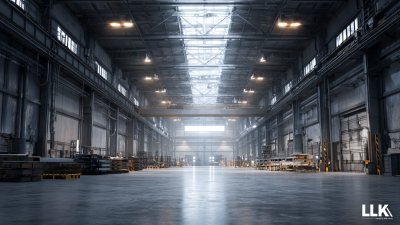
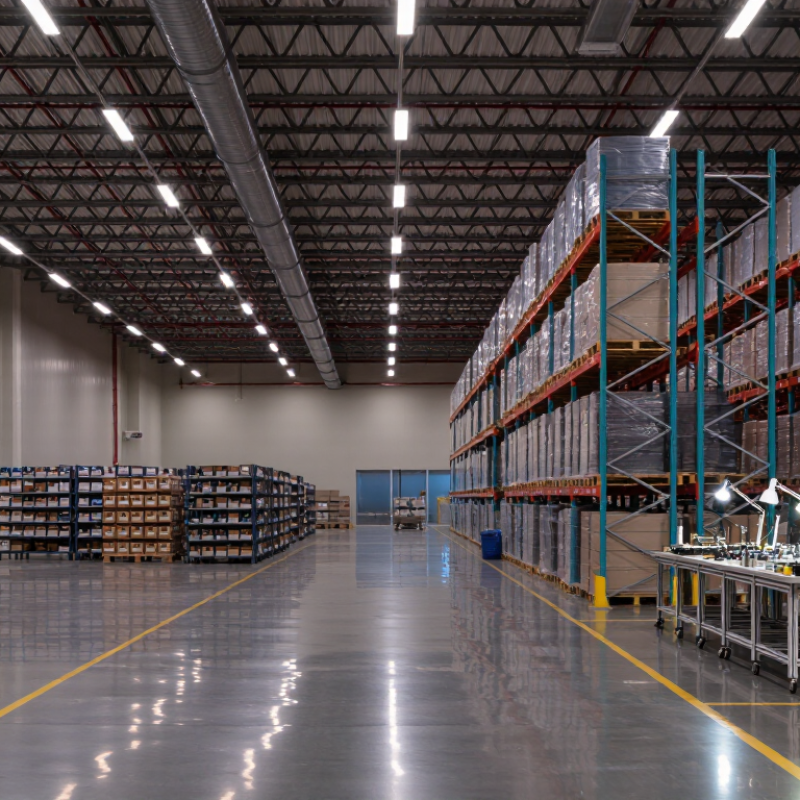
Industrial lighting changes with the work. In a high-bay warehouse, wide, even beams help workers read shelf labels and spot forklifts between tall racks. At inspection benches, focused task lights reveal scratches, loose fasteners, or uneven finishes. Good design layers general and task lighting instead of flooding every surface with the same brightness.
The U.S. Department of Energy reports that LEDs use at least 75% less energy than incandescent lighting and can last up to 25 times longer. Those figures are useful context, not a guarantee for every facility: fixture choice, operating hours, and maintenance all matter. On a production line, glare on polished metal can hide defects. Shielding and careful aiming may help more than simply increasing brightness. Small details matter.
Dusty, damp, or cold environments need different fixtures and controls. Sealed housings can limit dust entry, while suitable materials resist corrosion and temperature changes. In cold storage, check that lights start reliably at low temperatures; in loading bays, consider the sharp contrast between indoor light and daylight. The Illuminating Engineering Society’s industrial lighting guidance emphasizes matching lighting to visual tasks and conditions. Still, a planned layout can miss shadows created by new equipment, so workers’ feedback after installation is worth collecting.
How Lighting Improves Visibility and Workplace Safety
In a factory, visibility is a safety control. Workers need to spot a wet patch, read a machine label, and notice a forklift entering an aisle before reacting. Poorly lit corners and hard shadows can hide these details; excessive glare can make them harder to see. The European standard EN 12464-1:2021 gives task-based lighting levels, including 300 lux for medium assembly and 500 lux for fine assembly. These are useful benchmarks, not a substitute for checking the actual task and space.
Good lighting is also consistent lighting. A bright workbench beside a dim walkway can force eyes to adjust repeatedly, while flicker or reflections on polished floors may distract workers. OSHA’s 29 CFR 1910.37 requires exit routes to be adequately lighted so employees with normal vision can see along them. That basic requirement matters during routine movement, not only emergencies. Keep lenses clean, replace failed lamps promptly, and check that shelving or new equipment has not cast fresh shadows.
Walk the work area at the height and angle workers use. Can someone read a small label without leaning into a machine? Can they see a spill near a doorway? Lux readings help, but numbers alone miss glare and contrast. More brightness is not always safer. The practical test is whether hazards and task details remain visible across the whole shift.
How Proper Illumination Supports Productivity and Quality
Why Is Industrial Lighting Important?
How Proper Illumination Supports Productivity and Quality
Good industrial lighting helps workers see details, read labels, and notice changes in materials without unnecessary strain. On a packing line, for example, even light across the work surface can make small print easier to check and damaged packaging easier to spot. Fewer missed details can mean less rework. It can also help workers maintain a steady pace, especially during long shifts.
Brightness alone is not enough. Poorly placed fixtures may create glare on metal surfaces or dark patches beneath equipment. Both can hide defects and make routine tasks harder. Lighting should suit the work: inspection areas often need clearer, more focused illumination than storage aisles. Color rendering matters, too, when workers must distinguish wires, coatings, or product colors. Small details matter.
A practical review can start with a walk through the facility during normal operations. Note shadows, flicker, and places where staff lean closer to see. Then compare those observations with suitable lighting measurements and task requirements. Maintenance deserves attention as well; dust on fixtures can gradually reduce useful light. This is easy to overlook. Even a thoughtful lighting plan may miss how a workstation changes after new machinery arrives, so adjustments should remain part of the process.
How Lighting Affects Worker Health and Comfort
Industrial lighting shapes more than visibility. It affects how comfortably workers inspect parts, read labels, and move through changing work areas. Poorly aimed fixtures can create sharp glare on metal surfaces, while dim corners force eyes to keep adjusting. That strain can contribute to headaches and fatigue. Flicker may also bother some workers, even when it is difficult to notice consciously. The effects vary by person and task.
Daylight matters, too. In a 2014 study of 49 office workers, those with windows received 173% more white light exposure during work hours and slept about 46 minutes longer per night than workers without windows (Boubekri et al., Journal of Clinical Sleep Medicine). This does not prove that daylight alone caused better sleep, and factory conditions differ from offices. Still, it suggests that workers’ exposure to light deserves attention beyond basic brightness. In industrial settings, well-shielded fixtures, suitable task lighting, and access to daylight where practical can reduce visual discomfort. Small adjustments help. Yet lighting plans are sometimes judged from a drawing, not from the worker’s position at a machine. That gap deserves a second look.
How Efficient Lighting Reduces Energy Use and Operating Costs
Industrial lighting can run for long shifts, so small efficiency gains add up. Replacing outdated fixtures with efficient LED systems can reduce electricity use while maintaining suitable light levels. The right choice depends on ceiling height, dust, heat, vibration, and the work being done. A warehouse aisle needs clear visibility, while a detailed inspection bench needs more focused light.
Controls can lower costs further. Occupancy sensors switch off lights in empty areas, and daylight sensors can dim fixtures near windows. In practice, settings need careful adjustment. A sensor that misses movement may frustrate workers; one that reacts to every passing forklift may save little. Measure actual operating hours and review utility bills before estimating savings. Where demand charges apply, reducing unnecessary lighting during peak periods may also help.
Lower energy use is only part of the calculation. Efficient fixtures often need less frequent replacement, which can reduce labor, lift rentals, and production interruptions. Dust on lenses still cuts light output, so a simple cleaning schedule matters. Not every retrofit pays back quickly. Compare installation costs, energy rates, maintenance needs, and expected service life, then check the results after installation. A tidy spreadsheet helps, but real operating data matters more.
Why Is Industrial Lighting Important? How Efficient Lighting Reduces Energy Use and Operating Costs
| Metric |
Conventional Lighting Scenario |
Efficient LED Scenario |
Potential Difference |
| Lighting system |
100 high-intensity discharge fixtures |
100 LED fixtures selected for comparable lighting levels |
— |
| Assumed input power per fixture |
150 W |
60 W |
90 W less per fixture |
| Total connected lighting load |
15 kW |
6 kW |
9 kW lower |
| Operating schedule |
4,000 hours per year |
4,000 hours per year |
Same assumed schedule |
| Annual lighting electricity use |
60,000 kWh |
24,000 kWh |
36,000 kWh less (60%) |
| Annual electricity cost at $0.12/kWh |
$7,200 |
$2,880 |
$4,320 lower |
| Estimated annual emissions at 0.4 kg CO₂/kWh |
24,000 kg CO₂ |
9,600 kg CO₂ |
14,400 kg CO₂ less |
| Potential operating benefits |
Higher lighting energy demand; lamp and ballast replacement may be required |
Lower lighting energy demand; maintenance needs depend on product life, operating conditions, and installation |
Possible energy and maintenance savings |
Illustrative estimate: Calculations assume 100 fixtures, system input power of 150 W versus 60 W per fixture, 4,000 operating hours per year, and an electricity price of $0.12/kWh. The emissions estimate uses an assumed grid factor of 0.4 kg CO₂/kWh; actual electricity prices and emissions factors vary by location. Confirm that replacement fixtures provide suitable light levels and distribution for the space.