How to Choose the Best Industrial Lighting?
Choosing the right Industrial Lighting system starts with the work happening beneath it. A warehouse aisle, a machine-vision station, and a loading dock need different light levels, beam patterns, and protection from dust or vibration. A bright fixture is not automatically a useful one. Glare on a polished floor can hide hazards, while uneven light can make labels and controls harder to read.
Energy and maintenance deserve equal attention. The U.S. Department of Energy’s Energy Saver guidance reports that LED lighting uses at least 75% less energy and can last up to 25 times longer than incandescent lighting. Those figures are useful benchmarks, not a promise of identical savings in every factory; existing lamps, operating hours, controls, and installation costs all affect results. The International Energy Agency’s Energy Efficiency 2023 report also emphasizes efficiency improvements as an important part of managing energy demand. Still, a lower wattage alone does not prove a better lighting plan.
Before comparing products, check measured light output, color quality, glare control, ingress protection, dimming compatibility, and warranty terms. Ask for photometric files and a layout that shows light levels at the actual task plane—not just a fixture’s headline lumen figure. Then consider maintenance access: a fitting mounted above a production line may take more than a ladder to service. This detail is easy to miss. Even careful calculations need a site check; real spaces have shadows, changing stock, and awkward corners. The best choice balances visibility, safety, energy use, and upkeep for the facility’s actual conditions.
Identify the Tasks and Conditions in Each Industrial Space
How to Choose the Best Industrial Lighting?
Identify the Tasks and Conditions in Each Industrial Space
A machine bay, loading dock, and inspection bench rarely need identical lighting. Start by listing the work performed in each zone: reading labels, checking surface defects, moving pallets, or maintaining equipment. The Illuminating Engineering Society’s Lighting Handbook relates recommended light levels to task difficulty and visual detail. Use its guidance as a planning reference, then verify conditions at the actual work surface. A bright ceiling alone can still leave a worker’s hands or a rack label in shadow.
Environmental conditions matter just as much. Note dust, moisture, heat, vibration, ceiling height, and cleaning routines before selecting fixtures. For example, a washdown area needs suitable protection against moisture, while a high-bay aisle may need controlled optics to reduce glare and improve visibility on shelving. Glare hurts. Check light at eye level and on vertical surfaces, not only on the floor. The U.S. Department of Energy’s 2020 U.S. Lighting Market Characterization estimated that lighting used about 6% of U.S. electricity in 2018. That makes operating hours and control needs worth documenting, too.
Tips: Walk each space during a typical shift. Record task locations, existing shadows, and hours of use. Compare those notes with a lighting plan, then measure after installation. A walk-through can miss changing conditions, so revisit the assessment when workflows or equipment change.
How to Choose the Best Industrial Lighting?
Identify the visual tasks and conditions in each industrial space.
Typical maintained illuminance targets increase with visual task difficulty. Actual lighting plans should also consider glare, uniformity, ceiling height, dust, moisture, maintenance, and applicable local standards.
Compare Lighting Types for Different Industrial Applications
How to Choose the Best Industrial Lighting?
Compare Lighting Types for Different Industrial Applications
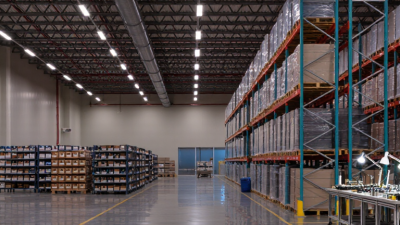
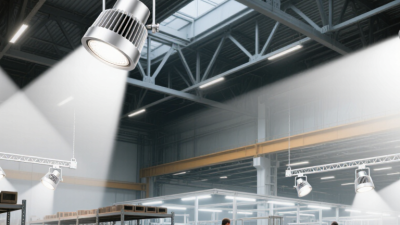
Industrial lighting should match the work area, not just its floor size. In high-ceiling warehouses, LED high-bays provide broad light over racks and loading aisles. Linear LED fixtures suit production lines, where workers need even light across benches and moving equipment. For close inspection, adjustable task lights can reveal small defects that overhead fixtures miss. Details matter.
Damp or dusty areas need sealed, ingress-protected fixtures; ordinary fittings may collect grime or let moisture in. In older plants, high-intensity discharge lamps may still serve large spaces, but warm-up time and relamping can disrupt work. Fluorescent tubes can fit existing layouts, though their performance and maintenance needs vary with temperature and age. A common mistake is treating lux as the whole story. Glare, shadows, and the contrast between a bright task and a dark aisle affect comfort too.
The International Energy Agency’s Energy Efficiency 2019 report estimates that lighting accounts for about 15% of global electricity use. The U.S. Department of Energy reports that LEDs use at least 75% less energy and last up to 25 times longer than incandescent lamps. That comparison is not a direct forecast for an industrial retrofit; actual savings depend on the existing system, operating hours, controls, and installation. Measure the work plane, check mounting height, and test a representative area before replacing every fixture. One trial may expose an awkward shadow or an overly bright aisle.
Assess Brightness, Color Quality, and Energy Efficiency
Choose brightness by measuring illuminance at the actual work surface, not by comparing lamp wattage. A machine bench may need crisp, even light, while a high-bay aisle needs adequate floor-level visibility. Check lux readings at several points, including under shelves and near moving equipment. Watch for glare and deep shadows. They tire people quickly.
Color quality matters when workers inspect wiring, labels, surface defects, or warning colors. Review the color rendering index (CRI), and check R9 when strong reds must remain clear. Correlated color temperature (CCT) affects the space’s appearance, but a higher number does not automatically mean better visibility.
The IEA’s Energy Efficiency 2023 report estimates that lighting uses about 15% of global electricity and causes roughly 5% of greenhouse gas emissions. Small design choices matter.
For energy performance, compare delivered lumens per watt for the complete fixture, not just the LED package. The U.S. Department of Energy’s 2022 Solid-State Lighting R&D Opportunities report discusses efficacy and controls as key improvement areas. Occupancy sensors and daylight dimming can cut wasted operating hours, though poor settings may frustrate workers.
One caveat: paper specifications cannot reveal every glare problem; test a sample fixture in the actual space before selecting a full installation.
Check Safety, Durability, Controls, and Compliance Needs
Industrial lighting decisions start with the work area, not fixture wattage. Map wet zones, washdown paths, dust, heat, vibration, and forklift traffic. A useful field check is to inspect the ceiling after a shift. Look for condensation, loose mounts, and dark patches over workbenches. Small details matter. Choose ingress protection and impact resistance for real conditions, not an idealized room.
Safety also depends on placement and maintenance access. Check that fixtures do not obstruct machinery, create glare, or leave shadows on inspection surfaces. In potentially hazardous areas, have a qualified professional verify that equipment is suitable for the specific risks. Durable housings, sealed connections, and replaceable components can reduce service interruptions. Still, a rugged fixture may be harder to clean or repair. Test it live. A short trial in one bay can reveal problems that drawings miss.
Controls should match how the space operates. Occupancy sensors can suit storage aisles, while dimming may help areas with changing daylight. Confirm that controls work with the selected drivers and emergency-lighting arrangements. Check applicable electrical, building, fire, and energy requirements for the site; rules vary by location and use. Keep product data, test records, and installation details available for review. One assumption worth challenging: brighter is not automatically safer. Glare and uneven light can make careful work harder.
Select and Test a Lighting Plan for Long-Term Performance
Choosing industrial lighting starts with the work, not the fixture. Map each task area, including inspection benches, aisles, loading bays, and tall storage racks. Note ceiling height, dust, moisture, vibration, and operating hours. These conditions affect light distribution and maintenance needs. Details matter. A bright aisle can still leave a machine operator’s controls in shadow.
Set target light levels for specific tasks, then check uniformity and glare at the actual working height. A basic plan on paper may overlook a beam blocked by a crane or duct. Walk the site at different times of day. Even a careful plan can miss a dim corner. That is worth correcting before installation expands.
Test a small area under normal operating conditions. Measure illumination with a light meter, and ask workers whether labels, edges, and moving parts are easy to see. Check for flicker, harsh reflections, and dark patches after equipment is in place. Record readings and fixture locations as a baseline. Recheck them after several months, especially where dust collects or lights run for long shifts. A small pilot can reveal problems early, though it may not represent every zone. Adjust the plan when real use challenges the assumptions.